


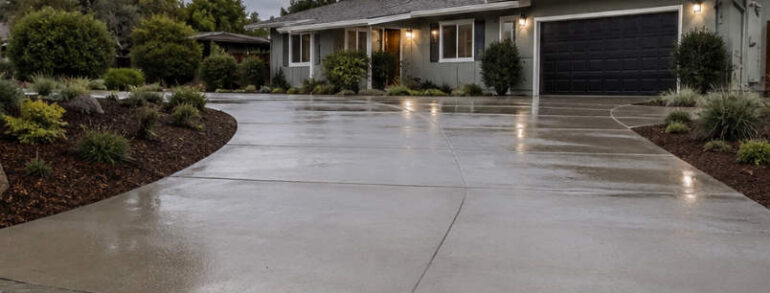
Forecasters are calling it a Super El Niño, and it is expected to bring one of the wettest winters the Central Coast has seen in years. The last event of this strength hit California in 1997-98 and dropped more than twice the normal annual rainfall along our coastline. For homeowners in Paso Robles, Atascadero, and the surrounding Central Coast, that means it is time to think about how your property, and specifically your concrete and foundation, will hold up under months of heavy rain.
Most people do not think about their driveway, patio, or walkway as a line of defense for their home. But concrete plays a bigger role in protecting your foundation than most realize. When it is cracked, poorly sloped, or sitting on soil that was never built to handle this much moisture, it can quietly let water do a lot of damage before anyone notices.
Why This Winter Is Different
Meteorologists are tracking sea surface temperatures in the Pacific that could rival the strongest El Niño events on record. For our region, that typically means an earlier start to the rainy season, more frequent atmospheric river storms, and rainfall totals well above what Paso Robles and Atascadero normally see between December and February. Instead of a handful of storms spread out over the season, homeowners should expect longer stretches of saturated ground and repeated heavy rain events.
That kind of sustained moisture is exactly what exposes weaknesses in concrete and drainage that might never cause a problem in a normal, drier year.
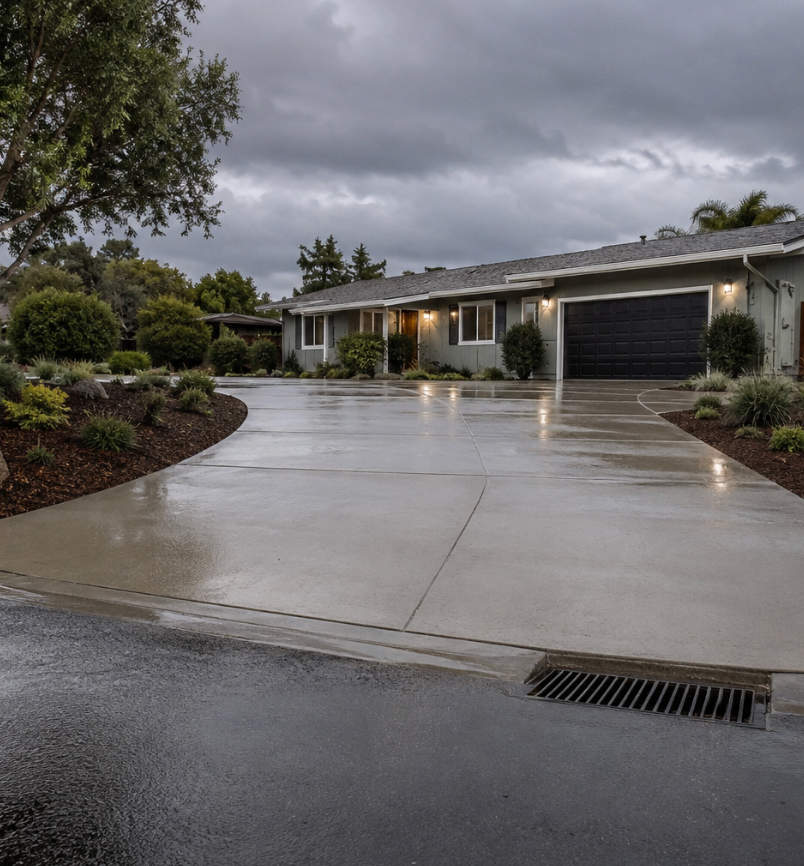
Cracks Are an Entry Point for Water
A small crack in a driveway or patio slab might seem cosmetic, but during a wet winter it becomes an entry point. Water works its way underneath the concrete through even hairline cracks, and once it is under there, it can erode the base material the slab is sitting on. Over time, that erosion leads to settling, uneven concrete, and larger structural cracks that are far more expensive to fix than the original small one would have been.
Getting cracks sealed or repaired before the rain starts is one of the simplest ways to prevent that chain reaction.
Improper Slope Can Send Water Toward Your Home
Concrete that is not sloped correctly is one of the most common and most overlooked issues homeowners deal with. Driveways, walkways, and patios are supposed to direct water away from the house. When the slope is off, whether from age, settling, or a poor original installation, water can pool against the foundation instead of draining away.
During a normal winter, this might cause minor puddling. During a Super El Niño winter, with weeks of saturated ground and repeated storms, that same slope problem can push water into a garage, under a doorway, or against a foundation wall long enough to cause real interior damage.
Expansive Soil Is a Central Coast Problem Worth Knowing About
Much of the soil across the Central Coast, including parts of Paso Robles and Atascadero, has a high clay content. Clay-heavy soil is considered expansive, meaning it swells significantly when it absorbs water and shrinks again as it dries. In a normal year, this cycle happens gradually. In a winter with months of saturation, the swelling can be dramatic.
When expansive soil swells beneath a concrete slab, it can lift and crack the concrete from below. That shift also changes the slope of the surface, which can create new drainage problems even on concrete that was installed correctly. In more serious cases, prolonged soil movement can affect a home's foundation, leading to issues that go well beyond the driveway or patio.
This is one of the most important things for Paso Robles and Atascadero homeowners to understand this year. Concrete problems and foundation problems on the Central Coast are often connected to what is happening in the soil underneath, not just the concrete itself.
Why Addressing This Now Matters
Once the rain starts, repair options become more limited and more expensive. Wet ground makes it harder to properly prepare a base for new concrete, and existing damage tends to get worse with every storm rather than staying the same. Handling cracks, slope issues, and drainage concerns now, while conditions are dry, gives a contractor the ability to do the job right and gives your property the best chance of getting through a wet winter without damage.
With forecasters pointing to one of the strongest El Niño patterns in decades, this is not a year to wait until spring to deal with a driveway crack or a low spot near the garage.
Protect Your Home Before the Storms Arrive
If you are a homeowner in Paso Robles, Atascadero, or anywhere along the Central Coast, now is the time to have your concrete and drainage evaluated before the winter rains set in. As a Paso Robles concrete contractor serving San Luis Obispo County since 2002, Creative Concrete & Design understands how local soil conditions and weather patterns affect concrete performance in this area.
Reach out today to schedule an inspection and get ahead of the wet season before it arrives.

